


KINGSTON, Jamaica – A senior official of the London-based Commonwealth Secretariat Monday said that the Caribbean, with its interconnected economies and shared aspirations must adopt new initiatives allowing regional countries to respond with equal sophistication and unity against corruption.
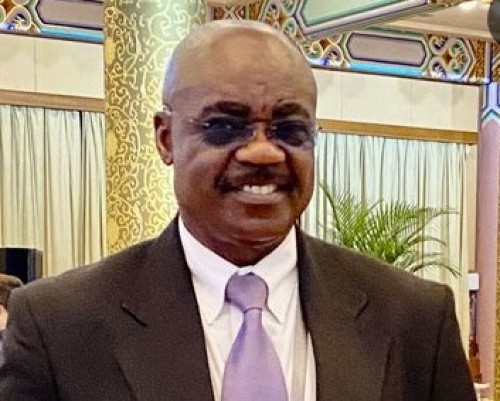 Acting Senior Director, Governance & Peace Directorate at rhe Commonwealth Secretariat, Dr. Roger Koranteng.Addressing the three-day 12th Annual Conference of the Commonwealth Caribbean Association of Integrity Commissions and Anti-Corruption Bodies (CCAICACB), the Acting Senior Director, Governance & Peace Directorate at the Commonwealth Secretariat, Dr. Roger Koranteng, said that the challenge of corruption is that it is not merely a legal or economic issue.
“It is a profound social challenge with far-reaching implications for governance, development, and societal trust. It undermines the principles of democracy and equity. It fuels inequality and inhibits our progress towards achieving sustainable development.
“Corruption translates into real social loss, in the Caribbean as well as globally, because it diverts resources away from the people and communities that need them most. When we talk about loss, let’s break it down. In tangible terms, in terms of economic loss, social service loss, governance and trust loss, and long-term development loss, economic loss, it includes public funds misused.”
Koranteng told delegates that this means money made for schools, hospitals, and infrastructure gets siphoned off into private pockets.
“Or reduced investment, where investors shy away from an environment where contracts are won through bribes rather than merit, limiting job creation and innovation. Or higher costs for citizens.”
Koranteng said corruption inflates the price of services and goods, meaning ordinary families pay more for less, adding that when funds are stolen, social services, health care, hospitals lack medicine, equipment, and staff.
“This translates directly into poorer health outcomes and higher mortality rates. Corruption in procurement or teacher appointments undermines the quality of schools, leaving children with fewer opportunities to succeed. What about infrastructure? Roads, bridges, and utilities are built cheaply, or not at all, because contracts are awarded based on favoritism rather than competence.”
The three-day conference is being held under the theme “Strengthening Regional Integrity Efforts and Anti-Corruption Mechanisms In An Evolving Global Environment,” and Koranteng said that transparency should not be viewed as an aspiration, but a daily practice.
He said that theme is, indeed, timely and crucial, noting that “in our fastest-growing world, the challenges we face regarding corruption are multidimensional and require unprecedented response.
“Let’s treat it in a global context, because we live in an era of rapid transformation, globalization, digital innovation, and shifting to political dynamics have created an opportunity for growth, but also new vulnerabilities. Corruption today is not confined within the national borders. It is transnational, sophisticated, and often enabled by technology.”
Koranteng said that the world is rather deceptive and that technology is rewriting the rules of engagement.
“Global markets are more connected than ever, and corruption, like the tide, flows across borders, adapting, evolving, and seeing cracks in our systems. But here is the truth. The Caribbean has always been resilient. You have faced storms, economic shocks, and global upheavals.
“Then you have endured. Now, you must rise again. This time, against the storm of corruption,” he said, adding “the Caribbean, with its interconnected economies and shared aspirations, must therefore respond with equal sophistication and unity against corruption”.
He said that on the issue of governance citizens lose faith in elections and institutions when corruption is seen as systemic.
“When justice can be bought, ordinary people feel powerless and crime flourishes. What about social inequality? Corruption disproportionately hurts the poor. People cannot afford to pay extra for basic services. There’s also long-term development loss. Brain drain.”
He said that skilled professionals migrate to countries with fairer systems, leaving gaps in local expertise.
“Where corruption today robs the future generations of opportunities, perpetuating cycles of poverty and inequality in our communities. So what is the core truth? It means that every dollar lost to corruption is a school’s own guilt. A medicine unavailable.
“A job not created. And a trust betrayed. It is not abstract. Corruption is not abstract at all. It’s deeply human. So what do we do? So let’s strengthen integrity,” Koranteng said, urging delegates “to reflect on our shared responsibility in strengthening integrity within our nations and across the region.
“Strengthening Caribbean integrity requires a multifaceted approach, which includes, one, building stronger institutions. Trustworthy institutions are the backbone of our democracy.
“We must invest in creating transparent and accountable public institutions equipped with the necessary resources and authority to combat corruption effectively. This includes regular audits, rigorous oversight, and empowering civil society to hold government institutions accountable.”
Koranteng said awareness is a critical component in the fight against corruption, urging countries to “engage our citizens, especially the youth, in conversations about integrity, ethics, and good governance.
“Enhancing collaboration is another. Corruption knows no bounds, no borders. Therefore, regional collaboration is essential. We must strengthen the partnership between Caribbean nations, law enforcement agencies, civil society organizations, and international entities to share best practices, intelligence, and strategies for combating corruption. By working together, we can create a united front against those who seek to undermine our societies.”
Koranteng said that in this digital age, technology can be a powerful ally in the efforts against corruption.
“We should explore innovative solutions that enhance transparency, such as the blockchain for public contracting, e-governance tools, the online whistleblower platforms, and others. Adopting technology can drastically improve our ability to monitor compliance and hold individuals accountable.
“And then commitment to legislation and enforcement. Finally, legal framework must be continuously assessed and updated to respond to the evolving corruption trends. Strong anti-corruption laws must be enforced rigorously,” Koranteng said, adding that perpetrators must be held accountable without fear or favour.
“Whether you are a government official, a member of a civil society, a private sector leader, an individual citizen, you play a critical part in shaping an environment where integrity is prioritized and corruption is actively resisted.
“As we navigate in an increasing interconnected global landscape, we are confronted with new threats and complexities, including the rise of technology-facilitated crime, transnational corruption networks, and the exploitation of financial systems.
“These challenges underscore the urgent need for a unified and robust approach to enhance our integrity effort and strengthen anti-corruption mechanisms throughout the Caribbean.”
Koranteng acknowledged that the road ahead will not be easy, “but let’s remember that corruption can be defeated through an unwavering commitment, collective action, and a shared vision for a Caribbean that is free from the shackles of corruption.
“So today, I ask each of us, let us be bold. Let us commit not only to stronger laws, but to stronger values. Let us make integrity the heartbeat of our Caribbean identity. Because when integrity thrives, democracy flourishes. When corruption falls, opportunity rises.”

