


NASSAU, Bahamas – The Bahamas government has unveiled a 2026/2027 Budget projecting a US$223.1 million surplus while introducing targeted tax relief for first-time homeowners and new revenue measures aimed at large businesses, foreign property owners, immigration applicants and commercial users of public services.
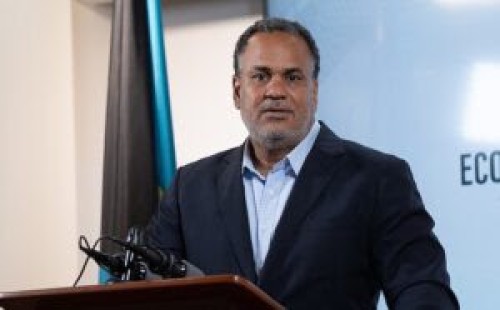 Michael Halkitis – Finance MinisterPresenting the budget in Parliament, Finance Minister Michael Halkitis said the government expects to generate $4.4 billion in revenue against $4.1 billion in expenditure, while reducing the country’s debt-to-GDP ratio to 59.9 percent.
Halkitis described the Budget as one focused on “responsible growth, economic resilience and opportunity for Bahamians,” while acknowledging global uncertainty linked to energy prices and international tensions.
Among the major relief measures is an expansion of VAT exemptions for first-time homeowners to include duplexes, triplexes and fourplexes where at least one unit is owner-occupied.
“The goal is to make home ownership more accessible while allowing families the opportunity to generate rental income,” Halkitis said.
The government is also increasing the real property tax exemption threshold for first-time homeowners from $500,000 to $600,000 and reducing duties on several household and health-related items, including sanitary products, chair lifts for the elderly and disabled, and wigs for cancer and alopecia patients.
At the same time, the administration is seeking increased contributions from major corporations and foreign property owners. Businesses earning more than $175 million annually will face a higher business licence rate, while foreign-owned properties will fall under a new tax category.
The Finance Minister said large companies “have benefited significantly from the country’s economic performance and are in a position to contribute more to national development.”
The Budget also introduces new revenue and enforcement measures, including a Bahamas Identification Number to improve compliance, landfill tipping fees for large waste producers, seabed lease fees for commercial marine use, and new registration requirements for foreign recreational vessels using Bahamian waters.
Immigration fees for certain residency and work permit categories will also increase, although the government plans to reduce work permit fees for caregivers assisting elderly or bedridden persons.
On healthcare, the government has allocated $11.6 million for clinic construction and upgrades across several Family Islands and is moving ahead with plans for a new hospital facility in New Providence with an initial investment of approximately $20 million.
The Finance Minister said the Budget reflects continued economic recovery and growth, supported largely by strong tourism performance.
Tourism arrivals rose by more than 11 percent in 2025, with nearly 12.5 million visitors recorded, while arrivals for the first quarter of 2026 were already significantly ahead of last year’s pace.
“We are seeing steady economic expansion, improving employment levels and stronger tourism numbers, all of which position The Bahamas for continued growth,” Halkitis said.

