


NASSAU, Bahamas - The Bahamas government says it has acquired all outstanding shares of the Grand Bahama Power Company (GBPC) in a deal Prime Minister Philip Davis said will cut electricity bills for customers by an average of 37 per cent.
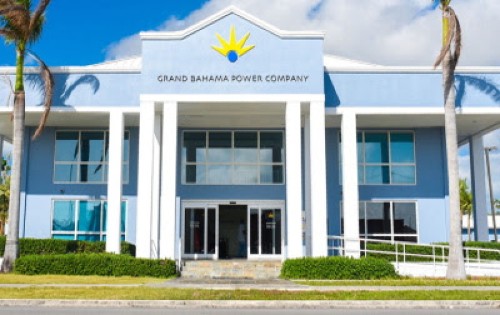 “From the very beginning, I said Grand Bahama needs the right partners, the magic must return to this island, and the people of Grand Bahama must sit inside the national vision for The Bahamas,” Davis said at the ceremony marking the occasion.
“You have had more than your fair share of storms, setbacks, uncertainty, and delay. Yet Grand Bahamians kept building lives and communities here. Workers kept showing up. Families kept believing. Business owners kept opening their doors. Young people kept hoping that Grand Bahama would rise again.”
Davis, who is campaigning for the May 12 general election, said that the acquisition is a “another major step forward, towards that better future” and that the government through a special purpose vehicle called the Grand Bahama Electricity Company, is acquiring all outstanding shares of GGPC.
He said that the transaction is funded by a loan from Standard Chartered and Scotiabank and guaranteed by the government.
“This decision was made with a clear purpose: to bring down the cost of electricity for the people of Grand Bahama and place this island inside our national energy strategy.
Grand Bahama Power Company will adopt the Bahamas Power and Light (BPL) tariff schedule for services provided to customers in Grand Bahama.
“This is going to bring down the cost of living in Grand Bahama, and make businesses here more competitive. Families will pay less for electricity. Small businesses will pay less. Large businesses will pay less.
“Churches, schools, shops, restaurants, hotels, manufacturers, offices, and community organisations across Grand Bahama will feel the difference.”
Davis, who did not disclose the amount of the loan, said that when electricity costs are too high, it’s difficult for businesses to invest, expand, and compete.
“Families spend money on their light bills instead of supporting the local economy. We are going to lower the burden – and in doing so, give families room to breathe, and to spend on other priorities. Bahamian businesses will have an opportunity to plan, and invest, and compete on level ground.”
He said that investors will understand that Grand Bahama has a more favourable investment climate, adding “Grand Bahama has the port, the land, the workers, the industrial base, the location, and the history.
“What Grand Bahama needs – and has long needed – is serious policy, serious financing, and serious partners aligned behind one national purpose,” he said, the work of the government was to find the partners, structure the deal, protect the people and to lower the cost.
“This acquisition also protects the employment and benefits of all existing employees of Grand Bahama Power Company. The Bahamian management team will remain in place,” he said, adding that in the coming months, trained employees of Grand Bahama Power Company will take up key roles in the government’s wider energy reform agenda.
Prime Minster Phillip thanked the Canadian-based Emera for its stewardship of GBPC and for its partnership during this transition.
“Emera has played a meaningful role in the management and development of GBPC over many years. We appreciate the responsible engagement and cooperation that helped bring this process to this point,” he said, thanking also “Standard Chartered and Scotiabank for their confidence in this transaction, in Grand Bahama, and in the economic direction of The Bahamas.
“Small countries must choose partners carefully. Capital should serve people. Financing should support growth. Public policy should make daily life better. That is the standard we bring to this decision,” Phillip said, rejecting any suggestion that the government should have delayed the transaction because of the campaign.
“Why do I have to defend a move?” he told reporters, adding “first of all, governance don’t stop because election is in the air. We still have to govern, and this transaction has been in the making for quite a while.
“The process just happened to be ending now. Should we abandon it when we’re going to be able to bring relief to the people of Grand Bahama immediately? We will bring relief now. I have nothing to defend, other than to say I’m bringing relief to Grand Bahama. I would hope to bring it sooner, but it just happened to be now.”
Emera first acquired holdings in GBPC in 2010.
Energy Minister Jobeth Coleby-Davis said the acquisition would benefit more than 17,000 households and more than 1,500 small and medium-sized businesses on the island. She framed the move as a step toward fairness, oversight and regulatory consistency.
“For the first time, Freeport is being brought fully into line with the rest of the country on electricity, oversight and pricing,” she said, noting that a household in Pineridge paid US$200.09 for 495 kilowatt hours, compared with US$121.38 for the same usage in Long Island under BPL.

