


BRIDGETOWN, Barbados - The inaugural Caribbean Economic Forum (CEF 2026) began here on Thursday aimed at attracting investments into the region that can deliver sustainable returns and real opportunities for every Caribbean national.
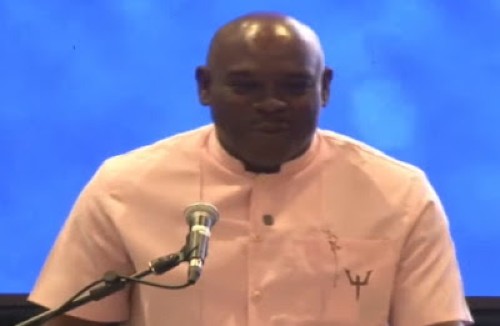 Barbados Finance Minister Ryan Straughn addressing the inaugural Caribbean Economic Forum (CEF) (CMC Photo)Barbados Finance Minister Ryan Straughn, delivering the feature address at the two-day event being held under the theme “Capitalizing the Caribbean’s Future: Mobilizing Intentional & Regional Capital for the Caribbean,” said it was vital for the ordinary Caribbean national to be part of the new initiative so as to give them the opportunity “to provide for their families and to make our economies stronger and much more resilient
“I know that we have it within us to financially engineer any solution, any solution, and I see the Caribbean Economic Forum is not a talk shop… it is about us having a firm commitment to solving problems on behalf of Caribbean people,” Straughn said.
The organisers said the CEF 2006 brings together investors, development finance institutions, governments, regulators, private-sector leaders and project sponsors and is built around four major investment pillars, namely energy transition and resilient power systems infrastructure; water, ports and climate-resilient infrastructure; food and agriculture systems modernization; and blue economy, coastal and maritime resilience projects.
They said that the forum emphasises project preparation, risk-sharing, blended finance, and public-private partnerships as practical tools for moving projects from concept to execution within 2 to 24 months.
Straughn, describing himself as an “unapologetic regionalist,” said while Barbados has lead responsibility within the Caribbean Community (CARICOM) Single Market and Economy (CSM) for the single market, “forums like these play a critical role in making that a live reality for our citizens, whether as businesses or individuals seeking to survive in this world hat is becoming even more interesting”.
The CSME allows for the free movement of goods, skills, labour and services across the region and Straughn said that the reality in the region is that ‘we have relatively high savings rates across …but the rate of return is perhaps less than half of that of persons in North America and Europe.
“Therefore, it is important that whilst we recognise the opportunities for investment, and we want to leverage those balance sheets that are here today, we want to implore you that we have to work alongside the regional institutions to mobilise regional savings and investment such that our Caribbean citizens can yield the same return or similar return as those in other jurisdictions.
He told the more than 200 delegates attending both in person and virtually that “ we would have failed our citizens if that mechanism for economic enfranchisement, given our history in this region, we would have failed them.
“Therefore, it is important as policymakers that we set the right environment that allows investment to flow in and out as freely as possible. But that investment can’t flow in and out freely without bringing the average citizen along their own development path.
“Generating wealth and having that wealth transferred from one generation to the next is important as part of the resilience building for the Caribbean. Whilst Barbados has advocated for climate change and for the reform of the international financial architecture, we must now make sure that everything we do must be deliberate, intentional…because our citizens’ future, the Caribbean’s future, relies on us creating the right ecosystem to attract the right partners to work alongside our people.”
The Barbados Finance Minister said that there is a wonderful set of talent in the Caribbean and efforts must be made to allow that talent to be unearthed, which requires resources, adding “I think that we have it within us… to make this happen”.
Straughn said that so far this week he has been attending conferences dealing with opportunities for Barbados and Caribbean investors, making reference to “a wonderful innovation and a company here in Barbados, Rum and Sargassum, and its intent is to ensure that as we seek to build our exports to one billion dollars (One Barbados dollar=US$0.50 cents) of rum by 2030, that the waste water from that rum is then converted into biofuel to help us deal with the geopolitical shocks that we are now dealing with.
Because every time there’s a spike in oil prices, that means a balance of payments potential issue, not just for Barbados, but for the region, and therefore our resilience building must see us attract investment, so investors in this room working with our rum industry, working with our agriculture industries across Barbados and the region, to achieve scale such that the Caribbean can deliver sustainable returns for our people”.
He said that this would be providing real opportunities for those persons with savings in the banks earning very little and “to be able to help them provide for their families and to make our economies stronger and much more resilient.
“I see the partners that are here in this room, and I see very strong commitment not just from our governments, but I think from our private sector, to be able to make the changes that are necessary in order to have capital come into the region with confidence, partner and mobilise with our regional pension funds, our regional social security systems, the average depositor, to ensure then that they understand what is in it for them in order to make these significant changes.”
But Straughn acknowledged that all of this is only possible really if governments are fiscally responsible and creating the right type of economic environment as well as regulatory environment that allows for these solutions to take root.
He said in the case of Barbados, over the last eight years the government has been able to bring the debt down from 178 per cent of gross domestic product (GDP) to 93.3 per cent at the end of March.
“Now had it not for COVID it would have been 84 per cent, but the reality is that we live in a world that is quite dynamic and therefore the solutions that we want you to be able to engineer must also help governments create as much fiscal space in order to invest on in the very things that create those safe assets that allows the multilateral development banks, the private capital, as well as the philanthropic space to be able to crowd in to help solve some of these problems in our region.”
Straughn said he was challenging the CEF because the region is paying “an extraordinary amount of money in reinsurance premium relative to the actual value of claims that are made every year on average and therefore that capital is leaving the region and not being effectively deployed to deliver for our people.
“Nothing wrong with the insurance industry but as you would appreciate if properties in Florida are being taken out of the pool it means less properties in the mix and insurance only works one way when you have numbers to share the risk.
“If properties in California are being taken out of the pool there’s an even larger proportion being taken out of the mix and therefore whilst there are some who do not acknowledge that climate change is real we in the region feel it because we are on the front line of it but we also feel it on the balance sheet side because the insurance premium keeps going up year after year because the pool is getting smaller and therefore we must be able to solve this problem with the insurers.”
Straughn said that the governments are focused on getting this solved because it is important ”that we understand that the building of resilience within the region also helps to attract more capital to the region and therefore investing or redirecting these insurance premium will be critical for unlocking more investment into the region solving some of the critical issues that we have to solve with energy with water with transportation you name it.
“… and therefore that is the challenge that I put to this forum today in that not just focus on the deals that you want to make today but we have to invest in this Caribbean for the next 100 years and therefore if we are going to be successful in creating a region that is just as prosperous as any part of the world ….reforms that are critical as government whilst focusing on ensuring that the private sector our domestic and regional private sector working alongside our colleagues from outside of the region that we understand the very clear mission is to help to enfranchise and empower the ordinary Caribbean citizen.”
Straughn said it is necessary for all stakeholders to work together to solve some of these problems faster and “therefore whilst governments may have limited fiscal space how we work together through a range of PPP arrangements and others can help us do things off balance sheet such that I don’t have to worry about …I’m asking of you all here today is critically important with respect to helping us to be able to shape a future that is bright for our Caribbean citizens and a future that is sustainable and supported”

