


PORT OF SPAIN, Trinidad – The Trinidad and Tobago government says while it has signed memoranda of understanding (MOUs) with United States-based companies for the proposed artificial intelligence data centre project, no final approval has yet been given.
 “It is important to remember that these are memoranda of understanding establishing a framework for collaboration and due diligence, not final project approvals,” Public Administration and Artificial Intelligence Minister, Dominic Smith, said amid concerns regarding the government’s announcement last Friday that it had signed three MOUs with American organisations, including two focused on developing artificial intelligence infrastructure and large-scale data centres in Trinidad and Tobago.
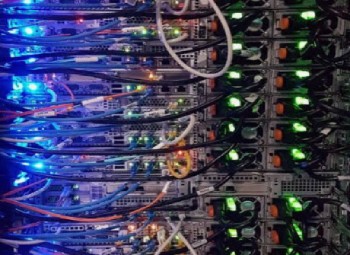
A data centre is a centralised physical facility that houses thousands of networked computers, servers, and data storage systems. The International Energy Agency says it acts as the backbone of the internet, storing and processing the digital information required for cloud computing, video streaming, and modern digital applications. Data centres consume immense amounts of power primarily due to high-density computing hardware and the massive cooling infrastructure required to prevent them from overheating.
High-density computer chips generate intense heat. To maintain optimal performance and prevent equipment failure, facilities require massive, continuous cooling systems. Cooling can account for up to half of a data centre’s total energy use.
The government said the project could also position Trinidad and Tobago as a supplier of vanadium, a strategic metal used in aerospace and defense industries, with the potential to meet up to 50 per cent of US demand if fully developed.
PLIPDECO, which owns the property where the plant is located, is also a party to the agreement.
But an online petition started by Syam Nath, a Trinidadian-based bio-acoustician and conservation researcher, calling for the suspension of approval for the project has since received nearly 5,000 signatures since it was created less than 24 hours ago.
The researcher argues that no environmental impact assessment, water availability study, cooling strategy or drought resilience plan has been publicly released and that the government should “suspend approval of large-scale AI data centres until comprehensive environmental water resource and infrastructure assessments have been completed, independently reviewed, as well as made available for public consultation.
“This petition does not oppose technology or investment. It calls for responsible planning, transparency, and evidence-based decision-making. Access to reliable drinking water is a fundamental public necessity and should not be placed at risk by industrial development without rigorous independent assessment.”
It further claims that no Environmental Impact Assessment, water availability study, cooling strategy or drought resilience plan has been publicly released for the proposed developments, arguing that without that information, the public cannot meaningfully assess whether the projects are in the national interest.
In the petition, Nath argues that while the AI data centre projects remain at the proposal stage, hyperscale facilities “can require substantial amounts of water for cooling, consume enormous quantities of electricity, and place additional demands on public infrastructure.”
University of the West Indies (UWI) economics professor, Roger Hosein, welcomes the project as one that will bring in more foreign exchange to stimulate construction and jobs, even as he notes the agreements with the US companies are in the early stages.
Environmentalist Dr Wayne Kublalsingh, who in the past few years have staged hunger strikes in support of environmental issues, said that the economic case for the developments remains weak.
He is questioning whether Trinidad and Tobago possesses sufficient natural gas resources to sustain another highly energy-intensive industry while existing manufacturers continue to face energy shortages.
“I think it’s a bad decision in terms of economic correctness,” Kublalsingh said, arguing that the government should instead focus on developing indigenous renewable energy industries, including battery manufacturing and solar technology, rather than subsidising foreign-owned data centres with inexpensive energy and water.
But Smith told the Trinidad Guardian newspaper that any project that advances will undergo the necessary technical, environmental and regulatory assessments, adding “this first fact is crucial.”
One of the agreement allows for Ernst & Young LLP to partner with third parties to develop a 300-megawatt data centre, while Hummingbird AI Holdings LLC has proposed a 150-megawatt AI infrastructure and data centre, with the potential to expand to 500 megawatts. Initial commercial operations are targeted for the first quarter of 2028, subject to the projects advancing beyond the due diligence stage and the Kamla Persad-Bissessar government has said the initiatives could attract billions of US dollars in investment and create thousands of skilled and semi-skilled jobs.
Smith while acknowledging the public concerns, said that the broader significance lies in Trinidad and Tobago’s growing appeal as a destination for digital investment, and that “the real story is the opportunity”
He said the interest from global companies reflects Government’s efforts to position Trinidad and Tobago as a regional leader in artificial intelligence and digital public infrastructure.

