


GENEVA – Health Ministers and senior officials from across the Commonwealth attending the inaugural Commonwealth Health Coordination Forum (CHCF) have highlighted Antigua and Barbuda and Belize for demonstrating how HPV-based screening, digital systems, and phased implementation can improve coverage and programme coordination in small island settings.
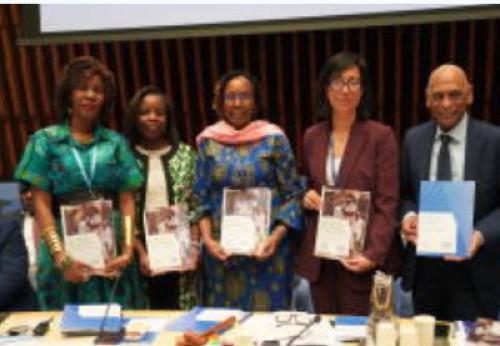 Chair of the CHCF, Leslie Ramsammy, (Right) former Guyana minister of health and permanent representative of Guyana to the United Nations Office in GenevaThe Forum precedes the six-day 79th World Health Assembly (WHA) which gets underway here on Monday and the organisers said that the CHCF will shape the Commonwealth’s collective cancer agenda for years as it responds to the findings of the Lancet Oncology Commission on Cancer in the Commonwealth.
Under the Commonwealth’s new Strategic Plan 2025-2030, the Commonwealth Health Ministers Meeting (CHMM) will be convened every four years. The CHCF, convened by the Commonwealth Secretariat, represents a streamlined ministerial-level forum during intervening years.
Chaired by the Guyana government, the first CHCF was convened under the theme, ‘Shaping the Future of Cancer Across the Commonwealth and was led by Leslie Ramsammy, the former Guyana minister of health and permanent representative of Guyana to the United Nations Office.
“Our purpose is to identify where Commonwealth co-operation can add practical value. This includes strengthening national cancer control plans, improving early detection and diagnosis, expanding access to treatment and palliative care, and improving data systems for better planning and accountability.”
According to the Commonwealth Secretariat, Antigua and Barbuda has been highlighted in the Caribbean region regarding its HPV work and th report developed with member governments and in partnership with Roche Diagnostics, was presented to health ministers, global health leaders, and development partners gathered at the forum.
In the case of Belize, the Forum was told that the country expanded access to cervical cancer services through financing and partnership models that support service delivery. “It is a small system example of improving sustainability by reducing reliance on external funding.”
The compendium features case studies from 12 Commonwealth countries, outlining how they are advancing efforts to eliminate cervical cancer through vaccination, screening, treatment and care at a time of tightening financial conditions and evolving health disparities.
Apart from the two Caribbean Community (CARICOM) countries, the other countries highlighted as having impactful interventions are Australia, Bangladesh, Fiji, Kenya, Nigeri and Malaysia.
In a video message to the Forum, Guyana’s Irfaan Ali, said Guyana applauds the Commonwealth for leading the fight against Non-Communicable Diseases (NCDs), especially the bold, necessary goal to eliminate cervical cancer by 2050.
“Guyana is also clear that no one country can end this form of cancer alone. This is why Guyana welcomes deeper collaboration across the Commonwealth and beyond,” he added.
Alongside the compendium, a Cervical Cancer Advocacy Toolkit was presented to support governments in raising awareness of the disease in their countries.
In her foreword to the toolkit, the Commonwealth Secretary-General, Shirley Botchwey noted the importance of equipping advocates to speak effectively and act decisively through leadership, collaboration, innovation, and sustained investment.
“First Ladies have a unique capacity to mobilise public attention, influence national dialogue, and inspire action on issues of profound social importance. This toolkit has been developed to support First Ladies, Spouses and partners of Heads of Government in leading informed, strategic, and impactful advocacy for cervical cancer elimination across Commonwealth countries.
“By placing women’s health, equity, and dignity at the centre of national priorities, we can accelerate progress towards a future where no woman dies from a preventable disease.”
The Assistant Director-General, Health Promotion, Disease Prevention and Care at the World Health Organization (WHO) Dr Jeremy Farrar, said “we need to address cancer initiatives in a continuum, by examining three strategic areas: promotion, prevention and treatment.
“The best way of connecting is to make sure that our health systems work for everybody in an equitable and accessible way. We have to reconnect our politics and our policies with communities and health. This health forum could help us push that forward.”
Recommendations emerging from the Forum will be conveyed to future meetings of Commonwealth Ministers of Health.

