


Jamaica Awaiting Word From Privy Council on Petition For Reparations
KINGSTON, Jamaica – Jamaica's government says it is awaiting the “next steps” from the London-based Privy Council after Kingston announced that Britain’s King Charles had referred its landmark slavery reparation petition to the country’s highest and final court.
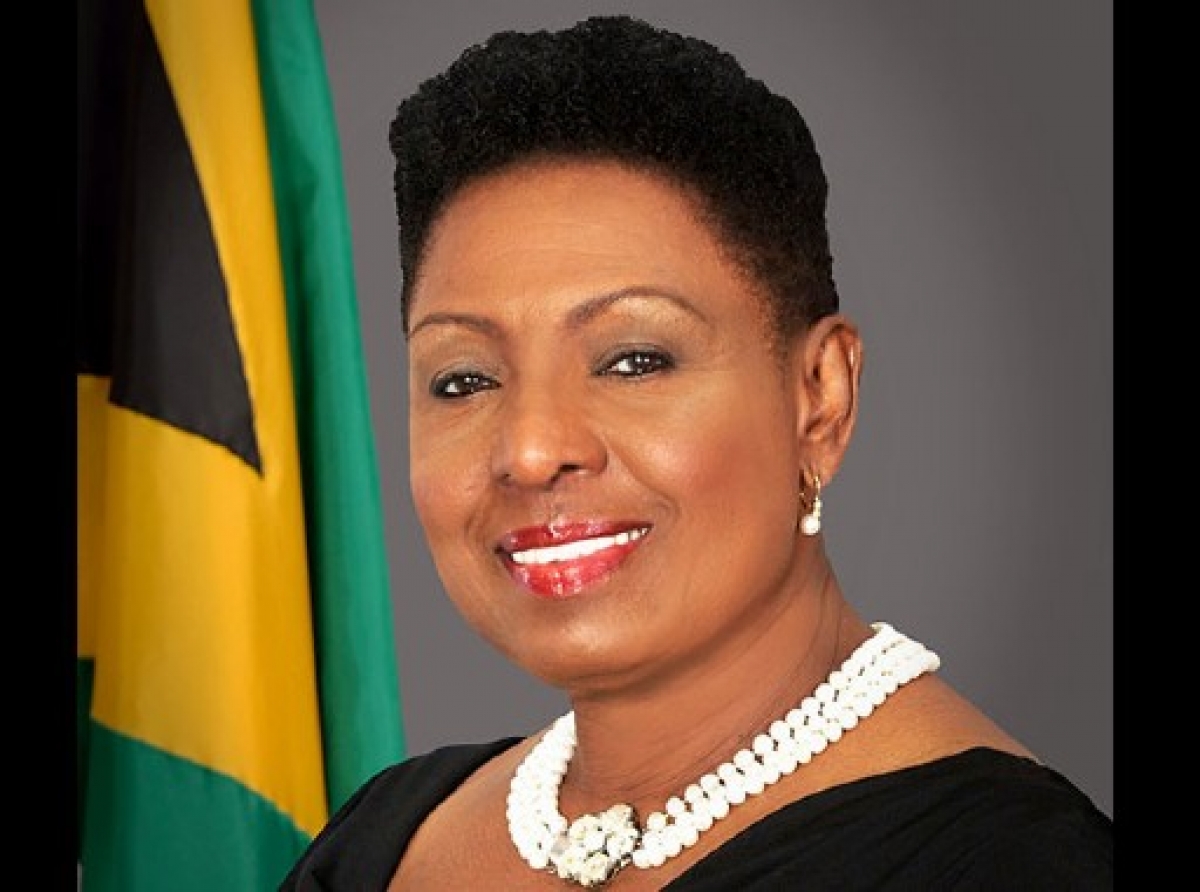
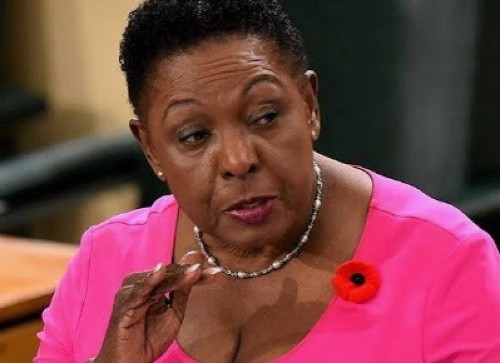 Minister of Culture, Gender, Entertainment and Sport, Olivia Grange“We are awaiting directions from the Judicial Committee of the Privy Council as to the next steps to be taken in the case. We will keep the Cabinet and the Parliament updated on the developments,” Minister of Culture, Gender, Entertainment and Sport, Olivia Grange told the Parliament on Tuesday.
She told legislators that the British had confirmed that Jamaica’s legal questions have been passed on to the Privy Council.
“The King could have ignored us. The King could have delayed responding to us. The King could have made a decision not to refer the questions to the privy council, or he could make a decision to refer the questions,” she said, adding “King Charles has referred the petition filed on the 7th of September, 2026, on behalf of the people of Jamaica to the Judicial Committee of the Privy Council.
“Indeed we went fearless and boldly into this chapter when we petitioned the King on Monday, September 7, 2026 – one day after the 245th anniversary of the commemoration of the Zong massacre, an event that captures the barbarity of chattel enslavement,” Grange told legislators.
The petition seeks guidance on three questions: whether the forced transport of Africans to Jamaica was lawful; whether it constituted a crime against humanity; and whether Britain is under an obligation to provide restitution for slavery and its enduring consequences.
United Kingdom-based lawyer, Edward Fitzgerald, who helped to formulate the petition as part of a team of eminent Jamaican and UK lawyers, said “the petition simply asks the King to refer certain points of real importance to the Privy Council for their determination.
“There’s a special jurisdiction under section four of the Judicial Committee Act for the King to refer an issue of legal or constitutional importance to the Privy Council, for their determination…Any matter of legal or constitutional nature can be referred that cannot be determined through the ordinary judicial process. And this is obviously one of those issues,” Fitzgerald added.
Jamaica had activated a rarely used mechanism in the Judicial Committee Act 1833, which allows the King to refer questions of “legal or constitutional nature” to the privy council when they cannot be resolved through ordinary courts.
Grange said that Jamaica had decided on this route given that it did not regard going to the International Court of Justice (ICJ) as an option.
“The United Kingdom has placed specific reservations on the compulsory jurisdiction of the ICJ which prevent the Court from adjudicating on disputes between the United Kingdom and the government of any other country which is or has been a Member of the Commonwealth”.
Legal observers say that a Privy Council opinion would not compel the United Kingdom to pay reparations, but that it could shape negotiations and legal options and set a precedent for other Commonwealth countries seeking reparations.
Grange reminded legislators that the filing of the petition was in keeping with the instructions of the House that “Jamaica should pursue reparations in the name of our African ancestors who endured hundreds of years of enslavement on this island, and in the name of the people of Jamaica.
“We have chosen to pursue a legal pathway. A matter such as this might have been considered by the International Court of Justice. However, our advice is that Jamaica is prevented from commencing inter-state litigation against the United Kingdom before the International Court of Justice”.
Grange said that London has placed specific reservations on the compulsory jurisdiction of the ICJ which prevent the Court from adjudicating on disputes between the United Kingdom and the government of any other country which is or has been a Member of the Commonwealth.
Grange said that she had also noted some of the criticism that followed the petition.
“We see that commentators have taken issue with the term petition, suggesting that we are going to the King on our knees. It’s simply the name of the process which is really a right to ask the King, the Head of State, to take some action on behalf of the people of Jamaica,” she said.
Lord Jonathan Sumption, a former judge of the Privy Council, had also dismissed the strategy as “nonsense”.
Lord Sumption said that Jamaica is actively taking advantage of a Britain that is “riven by self-doubt and guilt” and “no longer confident in itself” in order to extract a massive financial payout.
But the Deputy Chairman of the National Council on Reparations, Bert Samuels, said Jamaica has an “enormously strong” case and dismissed Sumption’s arguments as “grossly inappropriate for any lawyer or judge who has not read the petition to comment on the petition.
“Why didn’t he check with us to hear our view and distill our view and give his informed opinion? I think his bias has outweighed his common sense,” said Samuels, who describes himself as a Pan-Africanist lawyer.
Grange said that the ancestors who survived the Middle Passage and were taken to Jamaica endured the most horrific experience.
“Their status as human beings was denied. They were categorised as chattel, which means property that was bought, sold, and branded with hot irons to signify them as belonging to specific enslavers.
“They were abused with impunity — men, women, girls, and boys. They were raped. They were made to breed. They were forced to work for free. This went on everyday for hundreds of years. It was the gravest crime against humanity.”
Grange said it was not enough for the leaders of countries that enslaved our ancestors to regret the suffering that slavery inflicted and to say to us let’s build a new future.
“They credit themselves with ending slavery without consideration of the successful struggle for freedom by the ancestors themselves including great heroes such as the Right Excellent Nanny of the Maroons, the Right Excellent Sam Sharpe, Tacky, Kojo, Accompong, and many others. Must we congratulate the arsonist for putting out the fire?”

