


BRIDGETOWN, Barbados – Newly appointed Foreign Affairs and Foreign Trade Minister, Chris Sinckler, has announced plans to recalibrate Barbados’ foreign policy so as to deal with what he refers to as a rapidly shifting world order.
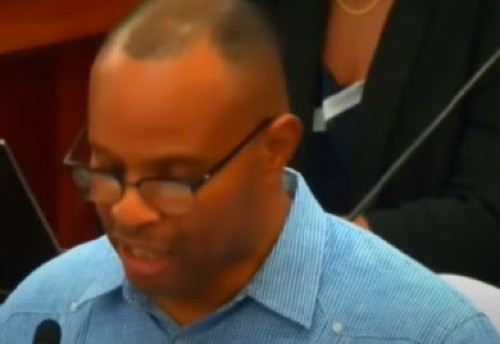 Foreign Affairs and Foreign Trade Minister, Chris Sinckler, speaking in Parliament on Tuesday.Sinckler told the legislators that Barbados would ensure that the 15-member Caribbean Community (CARICOM) grouping would remain a strategic anchor in its external relations.
“Even as we understand national priorities, CARICOM must be the anchor, a strategic anchor of our foreign policy,” he said, adding that Barbados will continue to strengthen ties within regional and hemispheric bodies such as the Association of Caribbean States and the Organization of American States (OAS).
To support this strategy, Sinckler announced plans to modernise the country’s diplomatic toolkit through data-driven trade analysis, digital diplomacy platforms, enhanced market intelligence systems, structured diaspora engagement and predictive risk monitoring.
“We can no longer approach the world as we approached them before. It is changing, and we too must change—not reactively, but proactively,” he said.
He said beyond the region, Barbados has been accelerating engagement with the Global South and traditional allies alike, noting that the country’s diplomatic outreach has intensified in recent years.
“Our engagement with the EU institutions in Brussels and in the (World Trade Organization) in Geneva is being sharpened specifically to give us the advantage to take the opportunities as they present themselves.’
He also assured legislators that Barbados “will stand by Cuba” and will not abandon its long-standing ties with Havana despite international sanctions, stressing that the island will work with all sides to ensure the Cuban people benefit from any future developments.
He said that Barbados and the Caribbean have had a longstanding beneficial relationship with Cuba, adding “we’re not going to turn our backs on our friends. We’re not going to pretend that we don’t have those relationships, but we’re going to work with all sides to ensure that whatever happens, the people of Cuba come out the better for this in the end.”
Sinckler was responding to a question from legislator, Dwight Sutherland on whether the island would face challenges in maintaining its sovereign base and forming trade relationships with countries under sanctions, including Cuba.
Since 1962, an embargo preventing US businesses and citizens from conducting trade or commerce with Cuban interests has been in place. Cuba is now facing a growing humanitarian crisis due to an intensified fuel blockade by the United States from the beginning of this year.
Pointing to Barbados’ position within the United Nations, calling for the lifting of the sanctions, Sinckler highlighted CARICOM discussions last week during its summit with the US Secretary of State Marco Rubio.
“There’s a potential that changes are going to happen, and those changes, we don’t know what they’re going to be. We don’t know what they are, and we can’t presume to say what they are.
“What we can do, however, is to ensure that we continue to monitor the situation, maintain our position in relation to sanctions and other issues which have been affecting the Cuban state, express our solidarity with them, ensure that we work to ensure that no disaffected humanitarian crisis exists in the country for whatever reason, to contribute as nations in the CARICOM region to ensuring that we support ordinary citizens in Cuba to be able to survive and prepare ourselves to work for a solution that would be to the benefit of the people of Cuba. That’s where we have to be in this space.”
“This is not a game of chance. It is not a game. It’s a very serious thing.”
Sinckler He stressed that the developments were being monitored closely to ensure that the relevant departments could make decisions based on real-time intelligence about what was happening with that country, “because there’s a saying which we use: today for me and tomorrow for you.
“Recalibration, however, does not mean abandonment. It means that we execute with discipline,” Sinckler said as legislators examined the BDS$80.6 million (One BDS$=US$0.50 cents) allocation in the Estimates ahead of the presentation of the national budget on March 16.
Sinckler, who was appointed to the post following the sweeping victory of the Barbados Labour Party (BLP) February 11 general election, said that the international landscape is undergoing profound transformation and that Barbados must rethink how it engages with the world.
“We are experiencing a structural transition in global affairs. The international order is evolving, and I say that with some caution. It may even be descending into a place that we may not even recognise.”
Sinckler spoke of the “geopolitical fragmentation, supply chain realignment, technological disruption, security-driven trade policy and the tightening of immigration and migration regimes” as defining features of the new environment.
“These are shifts that are not transient. They define the operating environment in which Barbados must secure its future,” he said, referring to what he called the central question in “how does Barbados convert diplomatic capital into measurable economic and developmental returns in an era of geopolitical volatility and fiscal constraint?”
He told legislators that Barbados response must be calculated rather than emotional.
“Our response must neither be reactive nor ideological… it must be strategic,” he said, speaking also of close attention to developments in Canada under new Prime Minister Mark Carney.
“The global posture of Canada is evolving… and Barbados is paying close attention because it is here with our longstanding relationship with Canada that we aim to forge new pathways to progress, to cooperation, and for investment,” he said.
Sinckler said Canada has already reached out to Barbados to begin negotiations on a new cooperation and development agreement.
In addition, the government intends to move beyond simply negotiating air services agreements to ensuring tangible connectivity outcomes, including expanded air links to Africa.
Against a backdrop of global uncertainty, the foreign minister warned that operating without firm foundations would be unwise.
“The volatility, the uncertainty, the capriciousness… is a dangerous space to operate in without firm foundations,” he said.

