


ST JOHN’S, Antigua – Prime Minister Gaston Browne says Antigua and Barbuda will continue to engage the United States and European Union in efforts to resolve concerns surrounding its Citizenship by Investment Programme (CBI), warning that mounting international pressures threaten the country’s economic interests and the mobility of its citizens.
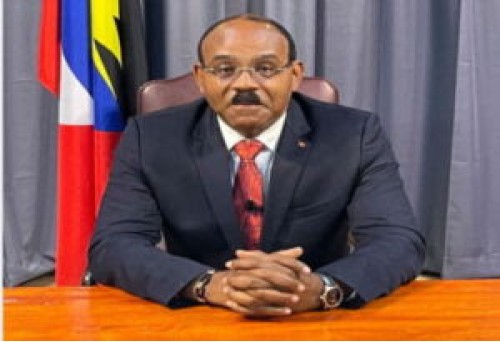 Prime Minister Gaston BrowneIn his address to the nation on Sunday, marking Antigua and Barbuda’s 45th anniversary of political independence, Browne acknowledged that the country faces significant external challenges, including the partial suspension of US visa issuance to its nationals and a request from the European Union to phase out the CBI programme by June 2028.
He warned that the EU’s position could jeopardise visa-free access to the Schengen Area, while the US restrictions have implications for citizens seeking educational, commercial and personal opportunities abroad.
“We have offered our full cooperation and remain prepared to work constructively to address the security concerns they have raised, while safeguarding the legitimate interests, rights and opportunities of our people.”
He said the government would continue negotiations with both international partners, adopting what he described as a respectful but firm approach.
The Prime Minister defended the importance of the CBI programme, noting that it provides critical revenue for public services, infrastructure development and government financing.
“Our Citizenship by Investment Programme has become an important source of public revenue and development financing. It helps to support public services, finance critical infrastructure and provide fiscal space that reduces the burden on taxpayers,” he said.
Browne acknowledged, however, that the government must remain innovative in determining the programme’s future.
“We cannot afford complacency, nor can we allow these challenges to diminish our national ambition,” he declared.
Turning to the country’s economic performance, the Prime Minister said Antigua and Barbuda had achieved a significant milestone by attaining the World Bank’s high-income classification.
However, he cautioned that the designation did not necessarily reflect the circumstances of every household, acknowledging that some families continued to struggle financially.
He identified the rising cost of living, global supply chain disruptions and increasing energy prices among the challenges confronting the twin-island nation.
The Prime Minister said his administration remained committed to cushioning the impact on vulnerable households while pursuing greater economic diversification, renewable energy development and employment opportunities for young people.
“Our independence must mean more than political sovereignty. It must also mean the economic capacity to determine our future, withstand external pressures and provide a better quality of life for our citizens.”
Browne also used the anniversary address to renew calls for reparatory justice, saying the consequences of slavery and colonial exploitation continued to affect Caribbean societies.
He disclosed that his government was advancing the issue in bilateral discussions with the United Kingdom and within the Commonwealth, including at a meeting scheduled to begin on Monday.
“Our pursuit of reparatory justice therefore deserves seriousness, sensitivity and sustained international engagement,” he said.
The Prime Minister said historical injustices must be acknowledged while maintaining constructive relationships with international partners.
The anniversary celebrations are also being marked by a visit from King Charles III and Queen Camilla.
Browne welcomed the royal couple, noting the historical significance of the visit, 45 years after Princess Margaret represented Queen Elizabeth II at the country’s independence celebrations in 1981.
He also addressed the future of the country’s constitutional arrangements, noting that Antigua and Barbuda had remained a constitutional monarchy since independence.
“The future of our constitutional arrangements, however, belongs ultimately to the people of Antigua and Barbuda and must be determined by them through our constitutional processes,” he said.
Reflecting on the country’s development, then Prime Minister highlighted investments in education, healthcare, airport and seaport infrastructure, including the establishment of the University of the West Indies Five Islands Campus.
He also recalled the devastation caused by Hurricane Irma in 2017, particularly in Barbuda, and praised residents for their resilience and rebuilding efforts.
Browne said the country must now focus on strengthening economic self-reliance, creating sustainable opportunities and ensuring that future generations benefit from the sacrifices made since independence.
“We have won our political independence. Now, let us deepen our economic independence,” he said.
“We have demonstrated our capacity to survive. Now, let us build the capacity to thrive.”

