


KINGSTON, Jamaica – Prime Minister Dr Andrew Holness has pushed back against criticism of his administration’s foreign policy stance, particularly in the wake of Jamaica ending its decades-old Cuban medical mission.
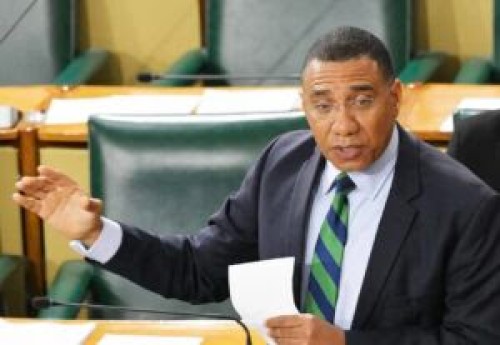 Addressing Parliament on Thursday during the Budget Debate, Holness said Jamaica must take a practical and calculated approach to foreign relations in a rapidly changing global environment.
He pointed out that the world order has evolved significantly since the Cold War ended in 1991, making it essential for countries like Jamaica to act strategically.
“Jamaica must be deliberate in how it navigates this shifting foreign policy landscape,” Holness said.
He argued that foreign policy decisions should not be driven by ideology, but instead guided by clear principles and national priorities.
“We must avoid being led by rhetoric. Our foreign policy must be anchored in strong values, while ensuring we advance our interests and recognise the influence of global partners,” he stated.
Holness said his government has consistently aligned foreign policy with economic goals, citing major gains from international partnerships.
He highlighted that Jamaica has been able to quickly access relief support and secure more than US$6 billion in reconstruction financing from multilateral institutions.
According to the prime minister, this level of benefit from foreign policy engagement is unprecedented.
He also reaffirmed Jamaica’s commitment to the multilateral system, noting that compliance with international standards remains critical.
Holness referenced Jamaica’s removal from the FATF and AML/CFT grey lists in 2024 as evidence of the country’s efforts to meet its global obligations.
Turning to the Cuban medical programme, Holness said concerns raised by the United States over a year ago prompted a thorough government review.
He explained that the programme was assessed against Jamaica’s domestic laws and its international commitments, and certain issues—particularly regarding how Cuban medical personnel are compensated—were found to be inconsistent with those standards.
Those concerns were communicated to the Cuban authorities, he said, with the hope that adjustments could be made to allow the programme to continue.
Holness acknowledged that the Cuban medical mission had made a meaningful contribution to Jamaica’s healthcare system.
He said Cuban doctors and nurses had integrated well and built strong relationships with patients across the island.
“Jamaicans have come to value their presence and would have welcomed their continued service,” he noted.
The prime minister also expressed concern about the situation in Cuba, describing the country as a close neighbour, and said Jamaica would continue to offer support through Caricom.
He added that recent reports of renewed engagement between Cuba and the United States present an opportunity for improved relations.
“We see this as a chance for progress and remain hopeful for a positive outcome,” Holness said.

