


BRIDGETOWN, Barbados - St. Kitts and Nevis Prime Minister Dr. Terrance Drew will later this month host a meeting with United Nations officials to discuss a diagnostic and action plan that is being developed to address crime as a systemic regional challenge, a senior United Nations Development Programme (UNDP) official has said here.
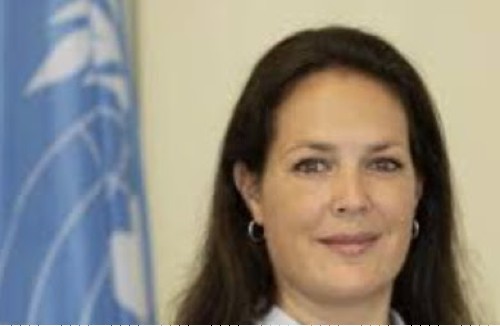 Stephanie ZiebellDeputy UNDP Resident Representative for Barbados and Eastern Caribbean, Stephanie Ziebell, said regional leaders and the UN will meet in Basseterre shortly to advance discussions on the plan.
“Later this month, we’ll be having a dialogue in St. Kitts, actually hosted by the prime minister around the UN CARICOM dialogue on what to do next and what are priorities for the region,” Ziebell said, adding that the initiative is part of a broader collaboration between CARICOM and the UNDP to address crime through a public health lens.
“Building on high-level discussions in 2025, a CARICOM-UNDP diagnostic and CARICOM UN Action Plan are currently under development, aiming to fill a much-needed gap as the first regionwide evidence based assessment that looks at crime and violence in the Caribbean as a shared systemic challenge,” Ziebell said as she launched the UN Eastern Caribbean 2025 Annual Results Report.
She said that the initiative is aimed at identifying root causes, weaknesses in systems and priority reforms.
“Building on this, the CARICOM UN Action Plan translates the analysis into a coordinated regional framework with practical priorities, shared standards, and agreed roles for CARICOM institutions, member states, and UN partners,” she said, noting that the broader UN approach to peace, safety and justice is focused on strengthening institutions and communities.
“A key focus of our collective work is building stronger institutions and safer communities grounded in careful analysis, partnership, and a commitment to conflict-sensitive, gender-responsive approaches.
“Justice and safety must be accessible for everyone, especially women and girls, persons with disabilities, and people at the margins, so that no one is left behind,” Ziebell said, adding that strong institutions help societies withstand multiple shocks.
“These systems help societies withstand shocks, whether those shocks come from disasters, economic stress, or rising forms of violence and insecurity.”
The UN is also supporting efforts to strengthen responses to gender-based violence and improve human rights protections.
“Together, we have supported countries in the region in strengthening [gender-based violence] prevention and response frameworks, supporting human rights protection systems, advancing regional agreements on domestic violence prevention and organised crime, enhancing border management, forensic capacity, and law enforcement cooperation.”
Ziebell also noted the Canada-funded PACE Justice Programme, which is being implemented across eight Caribbean countries, including Barbados, Antigua and Barbuda, Dominica, St. Lucia, and St. Kitts and Nevis.
The programme is helping to modernise criminal justice systems and reduce delays and Ziebell said “support has included court equipment, digital case management assistance, crime scene investigation training, case management workshops, restorative justice tools, attorneys general coordination, standard operating procedure harmonisation, AI readiness work, and backlog reduction dialogue.”

