


CASTRIES, St. Lucia– The Director General of the Organisation of Eastern Caribbean States (OECS), Dr. Didacus Jules, Monday said that while the tourism sector remains one of the single largest earner in most Caribbean economies, “we must be honest about how much of its promise remains unrealised”.
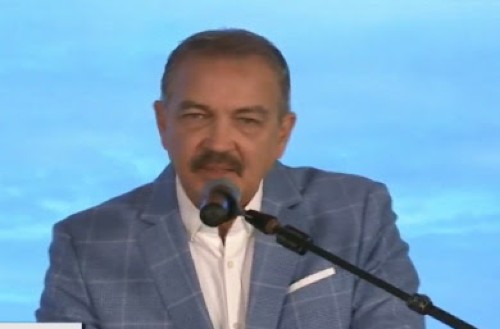 Antigua and Barbuda’s Tourism Minister, Charles “Max” Fernandez.In a congratulatory message to Antigua and Barbuda’s Tourism Minister, Charles “Max” Fernandez, on his election as chair of the Barbados-based Caribbean Tourism Organization (CTO) Council of Ministers and Commissioners of Tourism, Jules noted that “too large a share of every visitor dollar leaves our shores.
“Too few of our farmers, fishers, artisans, creatives and small entrepreneurs are woven into the tourism value chain. And too many of our communities live beside the industry without sharing fully in its rewards” said Jules.
Fernandez was elected at the CTO’s annual general meeting n Guyana last week and succeeds the Barbados Tourism Minister Ian Gooding-Edghill, while Colin James, the chief executive officer of the Antigua and Barbuda Tourism Authority, assumes the chairmanship of the CTO Board of Directors.
“This is a proud moment for Antigua and Barbuda and for the entire OECS family. Minister Fernandez brings to the chair long experience at the helm of one of the region’s most dynamic tourism economies, and a record of steady, practical leadership. The confidence that his Caribbean colleagues have placed in him is well deserved.”
Jules said that Fernandez was assuming the position at a demanding time for the industry pointing also to the scale of the challenges ahead:
He said that the climate crisis threatens the reefs, beaches and coastal infrastructure on which the Caribbean product rests, while stronger storms, sargassum influxes and rising insurance and energy costs test the resilience of every destination.
In addition, the benefits of tourism must reach further into societies, through local ownership, stronger linkages with agriculture and the creative industries, decent work, and real opportunity for our young people.
Jules said that the region must earn more from each visitor, not simply count more arrivals, adding that this requires reliable and affordable air and sea connectivity, especially within the Caribbean, greater retention of earnings, and better data to guide policy and investment.
“These are immense challenges, and none of our countries can meet them alone. They demand a Caribbean that negotiates together, markets together and plans together. That is precisely the purpose of the CTO, and it is why the quality of its leadership matters so much at this moment.”
“I am confident that under Minister Fernandez’s leadership the CTO will be equal to the challenges of these times. The OECS Commission stands ready to work with him, with Secretary-General Dona Regis-Prosper and with the CTO membership to build a tourism industry that is more sustainable, more inclusive and more rewarding for the people of our region,” Jules added.
Jules also congratulated St. Kitts and Nevis on being elected a vice chair for the CARICOM countries, the British Virgin Islands, as the ice chair for the British Overseas Territories, and Saint-Martin, elected vice chair for the French-speaking territories.
He said Saint-Martin’s election paves the way for a more dynamic engagement with the Francophone Associate Members of the OECS in the shared work of building Caribbean tourism.
The OECS groups the islands of Antigua and Barbuda, Dominica, Grenada, St. Lucia, St. Vincent and the Grenadines, St. Kitts and Nevis, Montserrat, Anguilla and the British Virgin Islands.

