


The Caribbean Knows About Disaster Response. Now It Must Lead In Risk Governance
Each year, when hurricane season begins in the Atlantic, governments across the Caribbean activate emergency plans, test communication systems, preposition relief supplies, and mobilize communities. These measures reflect decades of hard-won experience managing hurricanes, some of the most destructive in the world.
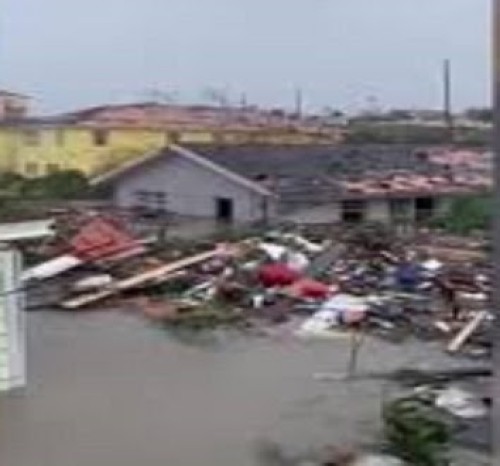 Hurricane damage caused in The Bahamas (File Photo)But by the time the first hurricane appears in the forecasts, many of the decisions that will determine its impact have already been made.
The strength of infrastructure and public services, the quality of land-use planning, the robustness of institutions, and the availability of financing for recovery are not decisions made in the days immediately before a hurricane makes landfall. They are the product of years of political decisions, public investment, and governance.
The next phase for the Caribbean is to govern risk even better, to integrate resilience into the everyday decisions that shape development processes. This is the essence of risk-informed development: planning, investing, and governing in ways that reduce future risk before a hazardous event occurs.
Risk governance: the next frontier of resilience
The Caribbean’s leadership in promoting a comprehensive approach to risk management dates back to the late 1990s, when it helped shape the Hyogo Framework for Action (2000-2015), globally, and the subsequent Sendai Framework for Disaster Risk Reduction (2015-2030) . However, the profound institutional and governance transitions needed to fully capitalize on these foundations have yet to be fully realized.
The current risk landscape demands that we address it comprehensively. Since 1995, tropical cyclones have caused losses exceeding 10 per cent of annual GDP on at least twenty occasions in the Small Island Developing States of the Caribbean.
Hurricanes test the resilience of economies, public finances, critical infrastructure, supply chains, and public institutions. A single storm can disrupt tourism, damage energy and transportation networks, impact health systems, and reverse years of development progress. These are not simply disaster management challenges, but development challenges.
That is why risk management must become a core function of government, integrated into how countries plan, invest, and deliver public services. Risk governance is how governments put risk-informed development into practice by integrating climate and disaster risk into every major policy decision—from budgeting and public investment to the delivery of essential services like health and education—ensuring that resilience is built through regular government programmes.
Beyond the losses and damages
The establishment of the Loss and Damage Response Fund is a significant milestone for climate justice and international cooperation. For vulnerable countries, including those in the Caribbean, it represents a long-awaited recognition that some climate impacts are unavoidable and that frontline countries should not bear this burden alone.
By early 2026, the Fund had secured approximately $800 million in pledges globally, with $340 million available through its first operational window. This is a significant milestone, but still far short of the funding needed to address the escalating costs of climate change.
Perhaps the greatest value of the Loss and Damage Fund, beyond the resources it provides, lies in the dialogues it fosters on finance for resilience. If climate risks are becoming systemic, then resilience can no longer rely on financing that arrives only after a disaster strikes. A forward-looking approach is needed that combines national investment, regional risk pooling, insurance, contingent finance, multilateral development finance, and mechanisms like the Loss and Damage Fund into a coherent resilience finance strategy.
In an increasingly tight financing environment, countries that invest in risk data, strengthen public investment systems, and develop well-prepared project portfolios will be in a much better position to access and deploy financing effectively.
The Caribbean has already demonstrated the value of this approach by developing regional public goods and promoting them through dedicated institutions. The Caribbean Disaster Emergency Management Agency (CDEMA) strengthens regional coordination in disaster preparedness and management; the Caribbean Development Bank (CDB) expands investment in resilient infrastructure; the Caribbean Community Climate Change Centre (5Cs) helps countries integrate climate resilience into development planning; and the Caribbean Renewable Energy and Energy Efficiency (CCREEE) promotes the region’s transition to clean energy.
Together with regional mechanisms such as the Caribbean Catastrophe Risk Insurance Facility (CCRIF), they form an interconnected regional resilience architecture, which brings complementary knowledge to shared regional priorities, while deepening leadership in their respective areas.
The true measure of success at this point would be how effectively we translate these priorities into everyday government decision-making to ensure resilient development outcomes.
Leading the next chapter of resilience
As risks continue to evolve, countries and regions that integrate risk into planning, public investment, and financing as soon as possible will be better positioned to safeguard lives, livelihoods, and future development gains. Regional and international actors are promoting a clear call to action for Caribbean countries to plan ahead for response and recovery, and to strengthen risk governance.
The Caribbean has earned global recognition for its leadership in disaster preparedness and response. This experience is now one of its greatest assets in protecting its own communities and can also contribute to how risk-informed development is understood and implemented worldwide.
Ronald Jackson, is head of the United Nations Development Programme (UNDP) programme on disaster risk reduction and resilience-oriented recovery. He is the former executive director of the Barbados-based Caribbean Disaster Emergency Management Agency (CDEMA).

